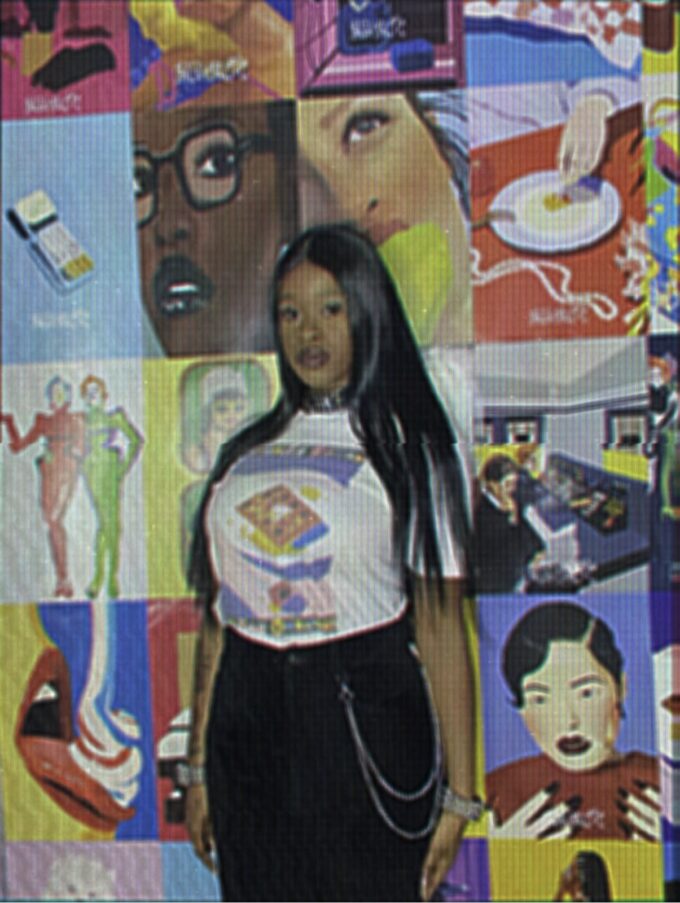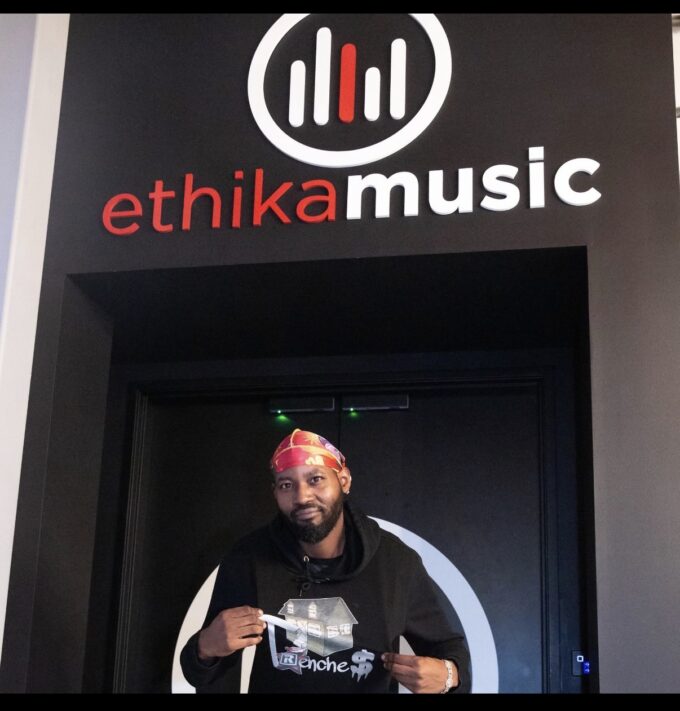

In an entertainment industry increasingly driven by algorithms, short attention spans, and pressure to fit neatly into a marketable category, Handsome Newton is attempting something far more ambitious. The West Philadelphia rapper, actor, comedian, writer, and producer is not simply pursuing several creative interests at once. He is building a world in which music, cinema, humor, fashion, and personality all become parts of the same larger story.
That raises an important question: Is the future of independent entertainment built around artists who specialize in one discipline, or around creators who can become their own complete cultural institutions?
For Handsome Newton, the answer appears increasingly clear.
Raised in Wynnefield, a neighborhood in West Philadelphia, Newton grew up deeply influenced by the music, films, and fashion of the 1990s. That era was especially significant because artists were rarely presented through music alone. Album covers mattered. Music videos carried narrative weight. Fashion communicated status, rebellion, regional identity, and imagination. The most memorable entertainers did not simply make songs—they created recognizable characters and complete visual languages around themselves.
Newton appears to have absorbed that lesson early.
At 13, he reportedly taught himself how to freestyle, developing a skill that would eventually become central to his creative identity. Freestyling is often treated as a test of quick thinking, but its deeper value lies in instinct. It requires an artist to trust an idea before there is time to overthink it. That instinct can be heard in Newton’s music, but it also helps explain his movement across acting, comedy, production, and fashion. Each discipline requires a willingness to respond to the moment while maintaining a recognizable point of view.
After years of mixtapes, showcases, experimentation, and gradual development, Newton reached an important milestone with The Night I Became Famous. Released on June 5, 2026, the project contains 12 songs and runs approximately 37 minutes, according to its listings on major streaming platforms. Its arrival followed a catalog that already included singles such as “You Make Em Mad (Y.M.E.M.),” “Super,” “No Superhero,” and “Thing for You,” as well as the 2025 releases Viral Fashion and Sunset on Jupiter. “Twerk It” was subsequently issued as a single in March 2026 before appearing on the album. (Apple Music, Spotify)
The title The Night I Became Famous is provocative because it invites more than one interpretation.
Is it a declaration that Newton has arrived? Is it a fictional moment inside a larger cinematic story? Or is it an examination of how fame is imagined before it is actually experienced?
For an independent artist, fame rarely begins with one dramatic night. It is more often the result of years spent working without widespread recognition. The title therefore carries an interesting tension. It sounds immediate, but the career behind it has been gradual. That contrast reflects a central truth about modern entertainment: audiences often encounter an artist’s breakthrough as a sudden event, even when that moment has taken a decade to build.
An Album Designed Like a Movie
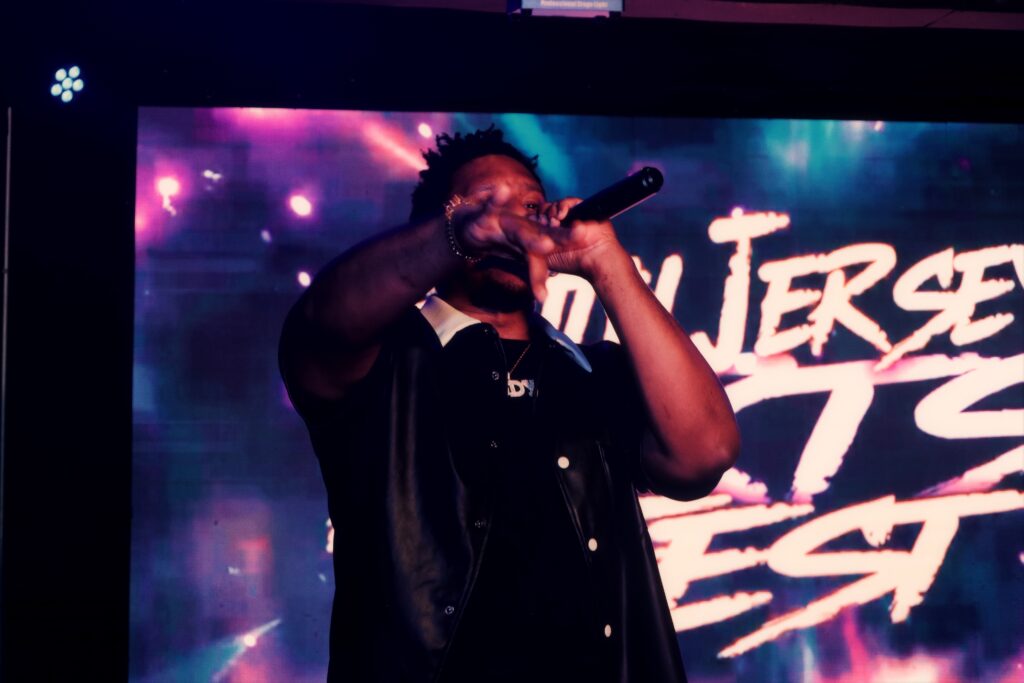
Rather than treating the album as a loose collection of singles, Newton presents it with a cinematic sensibility. The songs move between introspection, attraction, celebration, fantasy, humor, and emotional reflection. That range makes the project feel less like a traditional rap release and more like a sequence of scenes built around one central character.
“The Best Song” and “No More Nightmares” connect directly to Newton’s freestyle foundation. They display the spontaneity, wordplay, and confidence that have shaped his approach since adolescence. Yet spontaneity does not necessarily mean carelessness. The strongest freestyle-based artists learn how to preserve the raw energy of an initial idea while turning that idea into a structured record.
“Longest Summer Days,” identified in previous coverage as Newton’s personal favorite, occupies a more reflective space. The title alone suggests memory—the strange way childhood summers can feel endless while adulthood appears to move increasingly fast. It shows another side of an artist who understands that intensity does not always require aggression. Sometimes the most powerful performance is one that gives the listener enough space to consider time, change, and the distance between who someone was and who that person is becoming.
“Endy’s Song” and “Esposa” further demonstrate Newton’s willingness to experiment beyond a narrow understanding of hip-hop. These records suggest that genre, for him, is not a border but a collection of tools. That flexibility matters in a period when listeners move freely between rap, R&B, dance music, pop, Afrobeats, and electronic sounds without necessarily separating them into rigid categories.
At the other end of the album’s emotional range are records built to create immediate movement. Newton produced “Twerk It” himself, giving the song additional significance. It is not merely a performance placed over someone else’s musical foundation; it represents his ability to shape the atmosphere from behind the boards as well as from behind the microphone.
“Freak Love,” “Ghetto Hottie,” and “Girl U Fine” lean into confidence, attraction, humor, and nightlife energy. They provide the album with accessibility without requiring Newton to abandon personality. The distinction is important. Many independent artists struggle to create commercially inviting songs without sounding as though they are chasing an existing trend. Newton’s challenge—and opportunity—is to make records broad enough to travel while ensuring that they could not have come from just anyone.
That is where The Night I Became Famous becomes more interesting than its title initially suggests. The project is not only asking listeners to notice Newton. It is asking them to understand the range of the person seeking their attention. Recent coverage has similarly described the album as a cinematic and genre-crossing body of work rather than a conventional rap release. (Rolling Hype, 24Hip-Hop)
Can Versatility Become a Competitive Advantage?
The entertainment business often celebrates versatility, but it does not always know how to market it.
A creator who raps, acts, produces, writes, performs comedy, and develops fashion can be described as multi-talented. The same range, however, can also create a branding challenge. New audiences generally want an immediate answer to a simple question: Who is this person?
Newton’s emerging career challenges the assumption that this question must have only one answer.
His background in theater provides an important bridge between his disciplines. Theater teaches timing, projection, physical awareness, character development, and the ability to read an audience. Those skills can strengthen a rap performance just as easily as they can support acting or comedy. His comedic ability may sharpen his timing and charisma. His production work allows him to control the emotional setting of a record. His interest in fashion gives the resulting character a visual identity.
Viewed separately, these pursuits could appear unrelated. Viewed together, they form an interconnected creative system.
Newton is expected to extend that system into film through the role of Detective Howard in the forthcoming crime thriller Frames from the Streets. Promotional material surrounding the production indicates that the project has gone through writing, filming, and editing, although a confirmed public release date was not readily available at the time of publication.
The role of a detective could offer Newton the chance to display a more controlled dramatic presence. Rap often rewards directness and self-expression, while acting requires an artist to surrender some of that identity to another character. The real test will not simply be whether Newton appears convincingly on screen, but whether viewers can temporarily forget the recording artist and believe Detective Howard as a person with his own history, judgment, and conflicts.
If he succeeds, the performance could help reposition him from a rapper who acts to an entertainer whose work naturally travels between mediums.
Fashion as Identity, Not Decoration

Newton’s relationship with fashion may become another essential part of that expansion.
His style draws from the confidence and expressive freedom associated with the 1990s while avoiding the appearance of simple nostalgia. That distinction matters. Referencing a past era is easy; translating its spirit into something personal is far more difficult.
The biography provided for this feature states that Newton intends to debut his own hat line near the end of 2026. If completed, the collection would represent more than merchandise attached to a musical campaign. It could become another test of whether the personality established through his music can be translated into a physical product.
The strongest artist-led fashion brands succeed because the products feel like genuine extensions of the artist. The weakest ones amount to little more than names and logos placed on ordinary items. Newton’s advantage is that personal style is already part of his public presentation. The question is whether he can convert that individual taste into designs that allow other people to express something about themselves.
That question reflects a larger shift in entertainment. Today’s independent artists are not merely competing for streams. They are competing to build communities, images, experiences, and products that remain meaningful when a song ends.
The Meaning of Becoming Famous
Perhaps the most compelling part of Handsome Newton’s story is the space between confidence and proof.
He has spent years believing that he could one day stand among the defining creatives of his generation. Ambition of that size can make some observers uncomfortable, especially when it comes from an independent artist who has not yet received universal recognition. Yet nearly every major cultural figure had to believe in an identity that the wider world could not initially see.
The question is not whether an artist should possess that confidence. The question is what he builds with it.
Fame itself is no longer a reliable measurement of artistic importance. A person can become highly visible for a few days without creating anything that survives the moment. Meanwhile, independent artists can develop loyal audiences and meaningful catalogs without ever becoming household names. Longevity demands more than visibility. It requires discipline, adaptability, memorable work, and an identity capable of evolving without disappearing.
That may be the real significance of The Night I Became Famous. Its title describes an arrival, but the album feels more like the opening of a larger argument. Newton is presenting his case for why one artist should be allowed to occupy several spaces at once—and why independence does not have to mean thinking small.
Will audiences embrace the complete vision? Can the music lead listeners toward the films, the comedy, and the fashion? Can those different ventures strengthen one another without distracting from the craft at the center? And in an industry crowded with temporary attention, can Handsome Newton transform momentum into something lasting?
Those questions remain unanswered, but that is precisely what makes this stage of his career worth watching.
Handsome Newton is no longer simply working behind the scenes or waiting for someone else to define his place. He is stepping forward with a released album, an expanding screen career, production ability, theatrical training, comedic instincts, and a fashion concept in development.
The night he became famous may be the title of the current chapter.
What comes next will determine whether it becomes a prophecy.